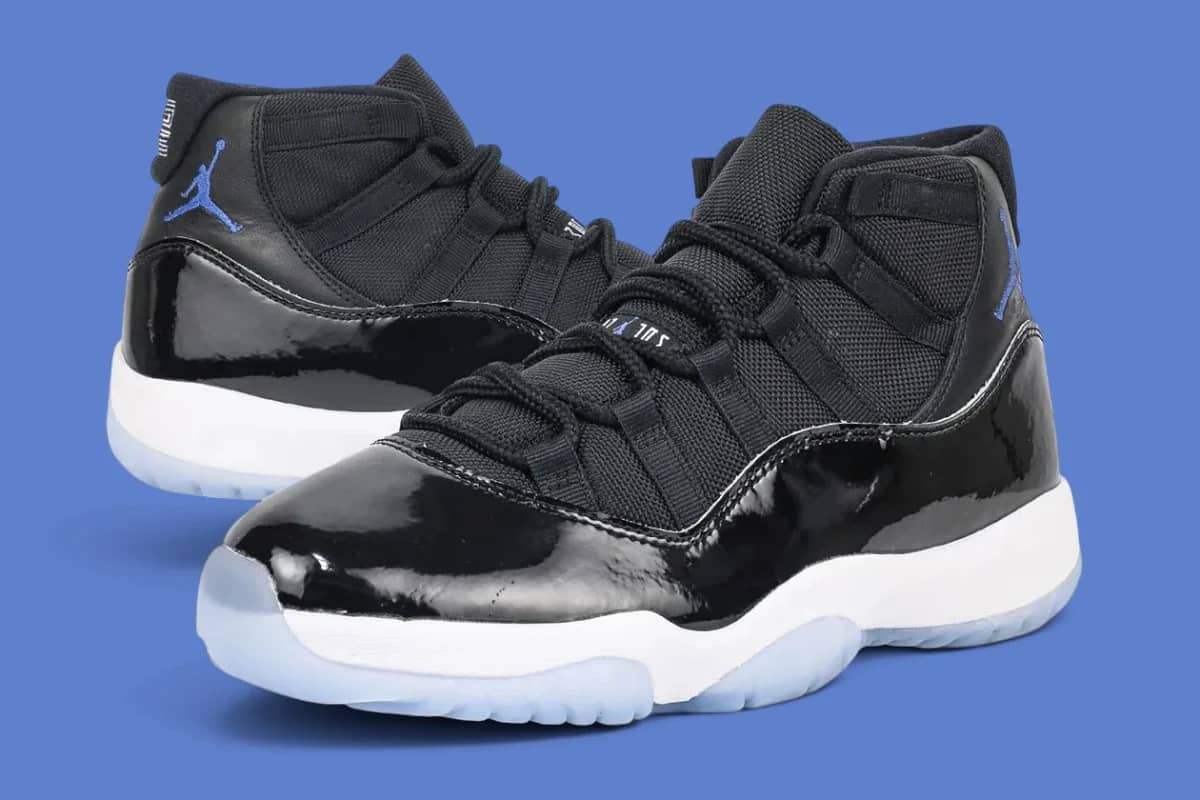

Air Jordan 1 Sizing Guide: Low, Mid, and High
ALEX NGUYEN•July 25, 2026
Sizing for the Air Jordan 1 is a topic that even people with years of experience still stop to think through, since the fit across the Low, Mid, and High builds isn't identical, even though they all share the same base silhouette. This piece pulls together the core principles, based on real world wear and the feedback that keeps coming up across the OG community.
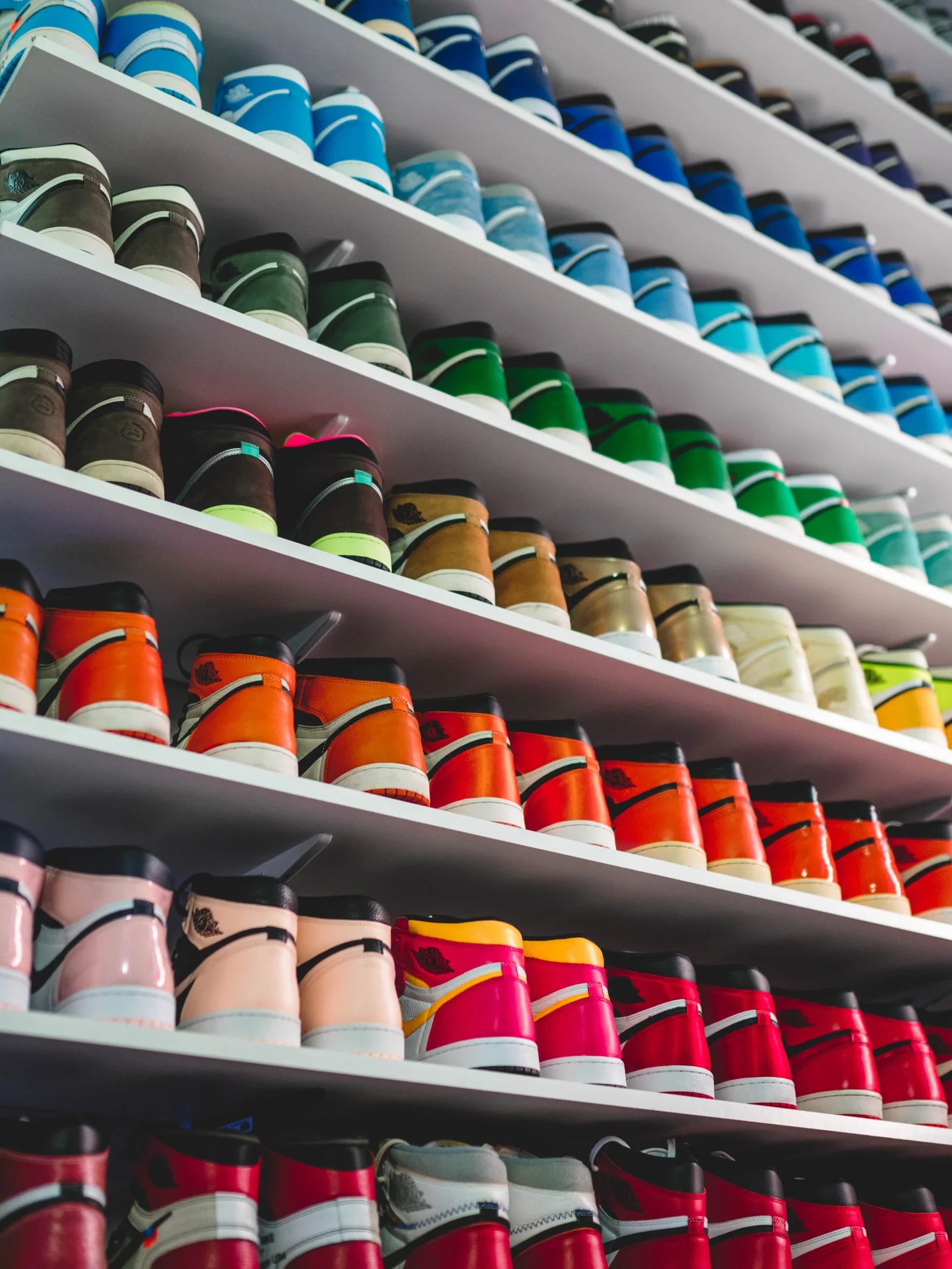
The General Baseline: True To Size
Broadly speaking, the Air Jordan 1 runs true to size (TTS) on Nike's standard chart, across all three builds, Low, Mid, and High. If you already wear a fixed size in Nike or Jordan footwear, you can generally apply that same number here without much adjustment. That's actually a point of difference from some other Jordan Brand silhouettes, which tend to run small or large relative to the standard chart.
Adjusting For Foot Shape
Fit isn't universal, and this is where personal experience matters most.
If you have a narrow foot or an average foot shape, stick with TTS, no need to size up or down. The leather Upper on the Jordan 1 is built to sit close to an average shaped foot.
If your foot runs wide or you have a high instep, it's worth considering going up half a size. That comes down to the Toe Box construction on the Jordan 1, which isn't particularly roomy, especially on the High and Mid, where the collar sits tighter than on the Low. Stick to TTS with a wide foot and you'll likely feel noticeable pressure across the toe area after a few hours of wear.
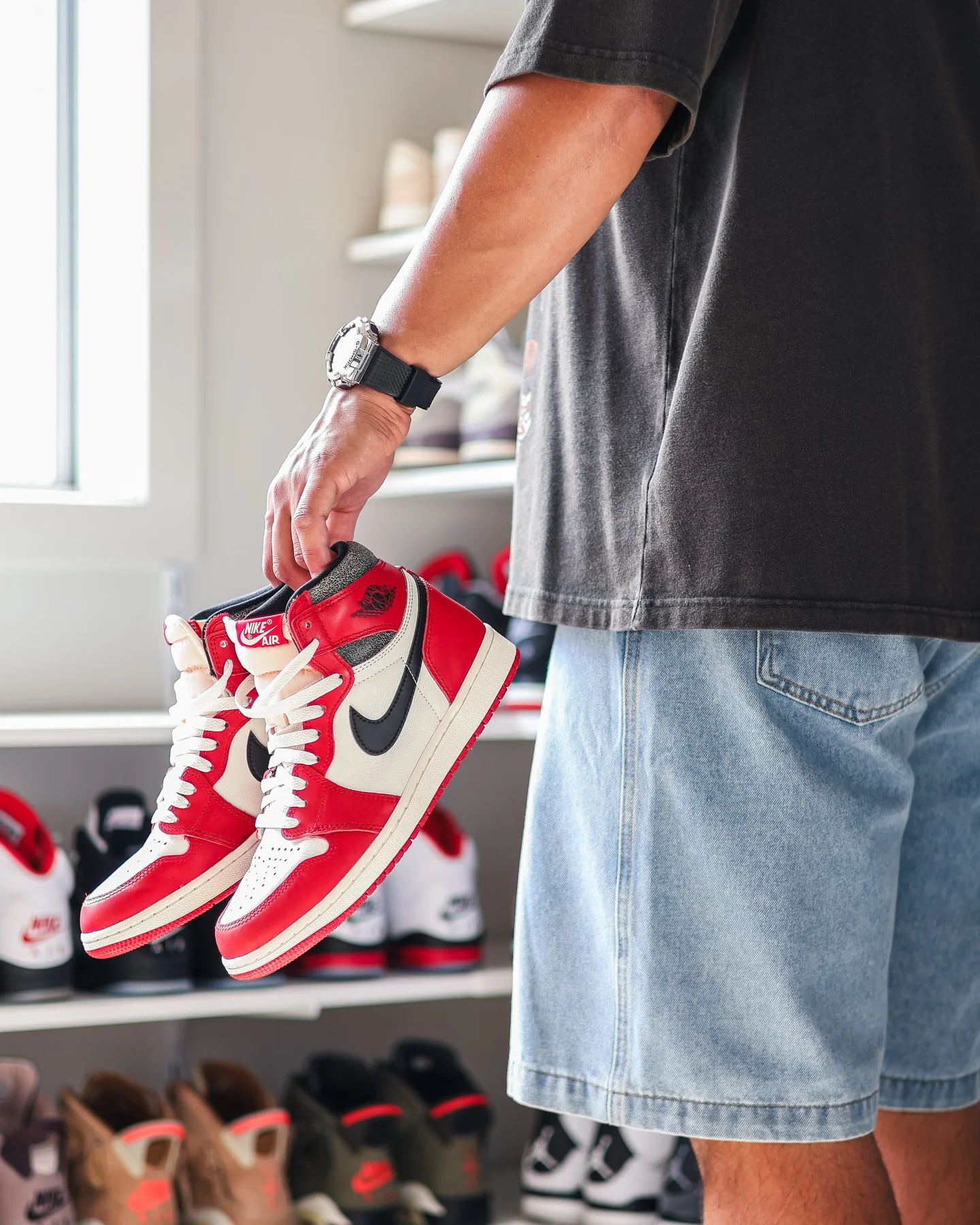
Converting Between Men's And Women's Sizing
This is the part most newer collectors get tripped up on, since Jordan Brand doesn't use a shared chart across genders. The standard gap between men's and women's sizing on the Jordan 1 is 1.5 sizes.
If you're a man looking to buy a WMNS release, the formula is your men's size plus 1.5. For example, a men's US 8.5 converts to a women's US 10.
Going the other way, if you're a woman buying a MENS release, take your women's size and subtract 1.5. A women's US 7.5, for instance, converts to a men's US 6.
This formula comes in handy specifically for WMNS Exclusive colorways, which usually don't have a men's counterpart, or the reverse, where a release is only available in men's sizing but the design has plenty of appeal for women too.
Comparing To The Air Force 1
People who are used to the Air Force 1 often feel thrown off switching to the Jordan 1, even within the same Nike family. The Jordan 1 Upper sits noticeably closer to the foot than the AF1, particularly around the midfoot and toe box. If you already know your AF1 size, going up about half a size on the Jordan 1 will help avoid a tight fit, especially with thicker leather builds or ones with extra lining.
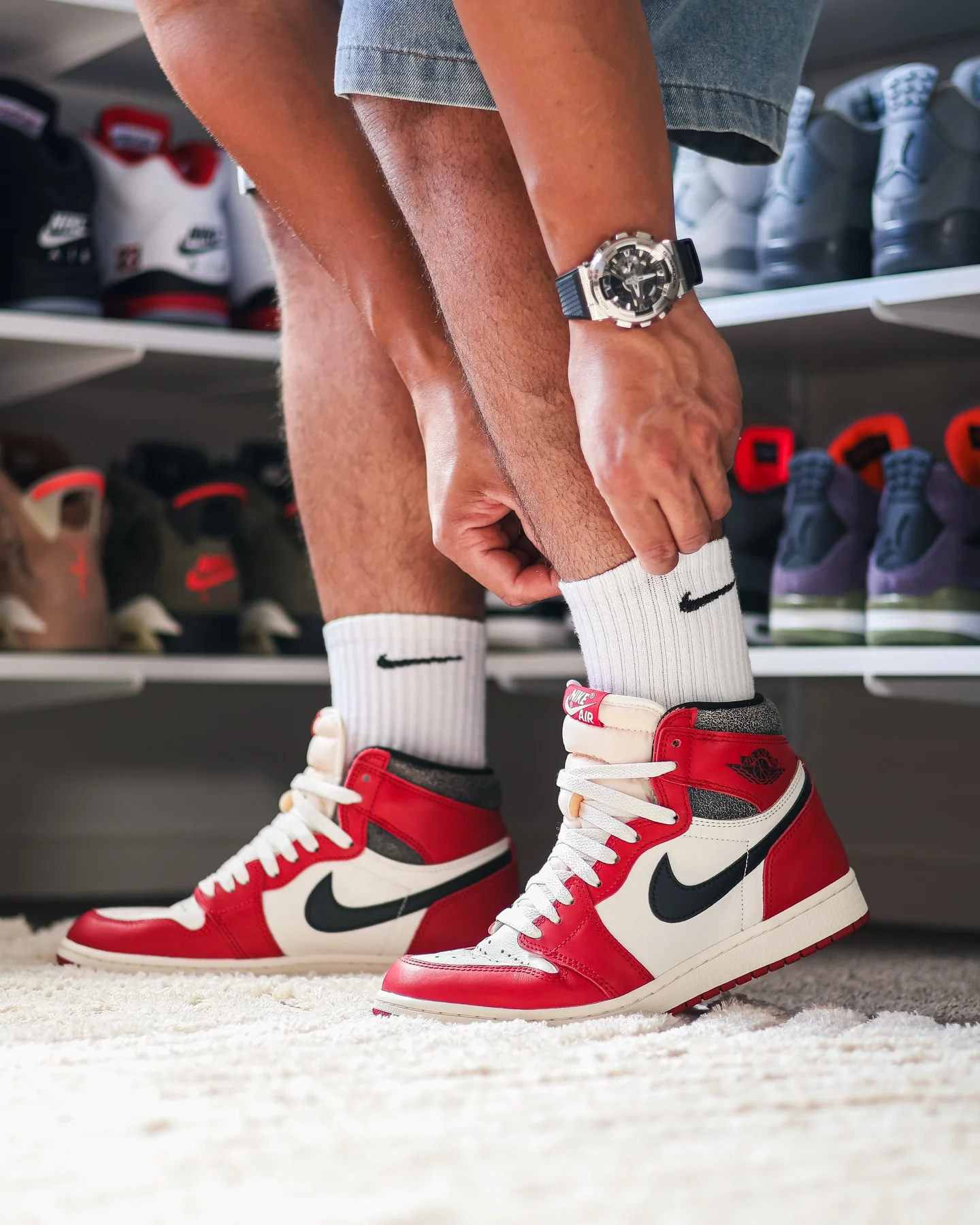
Material Also Affects How A Pair Wears
Not many people think about this, but upper material actually plays a real role in sizing, since different leathers stretch differently over time.
With soft leather or suede builds, the shoe will loosen up slightly after a handful of wears, mainly around the toe box and both sides of the midfoot. So if a pair feels a bit tight fresh out of the box, don't rush to size up, give it a few wears first and let the leather break in naturally to your foot.
Patent leather builds are the opposite story. That material barely stretches over its lifespan and holds its shape rigidly the whole time. With patent leather pairs, size for comfort right from the start, don't count on it softening up the way suede or standard leather eventually does.
A Few Notes By Version
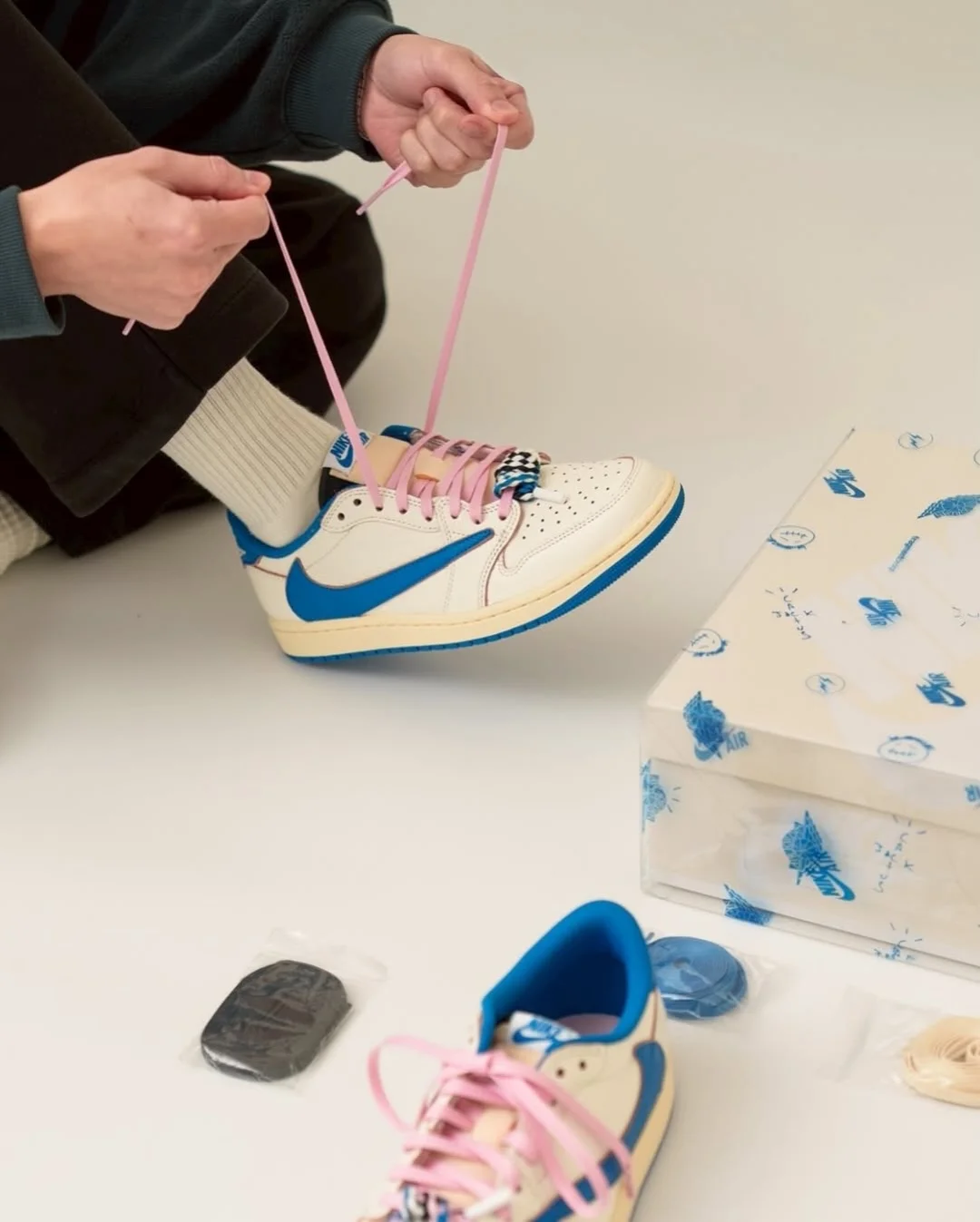
Across the three silhouettes, Low, Mid, and High, the base fit stays consistent, but there's a slight difference in how each one sits on the foot. The High, with its taller and thicker collar, tends to feel tighter around the ankle than the Low, so if you have a high instep, that's worth factoring in during a fitting. The Mid sits in between, not as snug as the High but not as open as the Low either. Length wise, all three share the same chart, the real difference comes down to how the collar sits, not toe box length.
Overall, sizing the Jordan 1 isn't complicated once you know your own foot shape and which material you're going for. For rare pairs that are hard to source a second time, it's worth thinking the sizing through carefully before committing, since returns aren't always straightforward with limited releases.
LATEST NEWS
Nike Sabrina 4 “Superstition” Honors Sabrina Ionescu’s Pre-Game Ritual
Air Jordan 6 White Infrared Returns True to Its 1991 Original
New Balance 1300 Made in USA Joins the Fall/Winter Collection
Wagyu Teams Up With Nike Air Max 90 for a Unique Culinary Concept
Bad Bunny Upgrades the Badbo to Version 1.1 in Chalk White
Adidas AE3 Cold Blooded Opens Anthony Edwards' Third Signature Line
Victor Victor Brings Back the Nike Air Force 1 in University Red